
Childhood is often described as the foundation on which adult life is built.
For someone who grows up feeling safe, supported, nurtured and understood, that foundation can provide a sense of security from which to enjoy and explore the world.
But when a person’s childhood is marked by abuse, neglect, instability, violence, abandonment or other prolonged experiences of threat or danger, the effects can sometimes extend far beyond childhood.
These experiences more often than not continue to influence how an individual comes to understand themselves, relates to others, manages emotions and responds to stress many years later.
Many people who have endured repeated experiences of adversity in their formative years often develop a type of post -traumatic stress disorder called C-PTSD or complex PTSD.
Recognised as a distinct diagnosis in the World Health
Organisation’s ICD-11, complex PTSD involves core symptoms of PTSD alongside persistent difficulties with emotional regulation, self-concept and relationships.
Understanding this distinction is crucial because the consequences of childhood trauma are not always immediately visible.
Symptoms of complex PTSD can appear much later in life and cause a range of emotional, physical, and relational challenges that you may not associate with your earlier life experiences, making it difficult to get the help and support you need.
Many people find that speaking to a professional about their symptoms early on can help them get an accurate diagnosis and quicker access to treatment, enabling them to process their experiences and lead a healthier, more fulfilling life.
Contact our trauma specialist team today.
Living with complex PTSD

A key thing to understand is that traumatic experiences do not necessarily remain in the past simply because the stressful event has ended.
A child who repeatedly experiences unpredictability, rejection or exposure to threat or violence may learn to remain highly alert to changes in their environment.
For instance, you may become exceptionally sensitive to other people’s moods and emotions, learn to anticipate conflict or change or become skilled at adapting yourself as a way to protect yourself from harm.
These responses can be remarkably effective and even necessary in childhood.
However, the difficulty is that the strategies we develop to survive one environment can become incredibly restrictive and even unhelpful in another.
Living with complex PTSD can look different from person to person.
For instance, an adult who experienced a lot of adversity and trauma in their younger years may continue to scan for danger even when they are objectively safe in the present.
Some people may find it difficult to trust others, struggle to regulate strong emotions or feel uncomfortable when relationships become intense.
The point here is that each of us responds to trauma differently, and how we carry these experiences into adulthood can vary significantly.
These responses largely depend on the support we received at the time the trauma occurred, our capacity to process the experience, and our understanding of the event itself.
Why childhood trauma can shape adult life
One of the most important things to understand about trauma is that the experience itself does not tell the whole story.
Two people can experience the same circumstances and be affected in profoundly different ways.
For example, two siblings may have witnessed the same experience of threat or violence from a parent in childhood. Yet, both have completely different perceptions and responses to that same event.
What matters is how the experience was processed by the person, psychologically, emotionally and physiologically.
And, as mentioned above, whether the person’s nervous system had the resources and support needed to make sense of what was happening.
“Trauma is therefore not simply a record of something that happened in the past. It can become a pattern of responding that continues long after the original threat has gone.”
Another point worth mentioning is that trauma does not necessarily begin with one catastrophic event.
For many people, the impact of trauma is cumulative.
It can develop through years of emotional neglect, chronic stress, unpredictable caregiving, repeated criticism, instability, fear or relationships in which safety depended on constantly monitoring another person’s mood.
For instance, a child who learns to read the room before speaking may become an adult who instinctively scans every environment for signs that something is wrong.
Or perhaps a child’s core needs were repeatedly dismissed and, as a result, they become an adult who struggles to recognise or express those needs.
Another example is when a child could not predict what version of a parent they would encounter day to day, which, in adulthood, means they find uncertainty particularly difficult to tolerate.
These responses often made sense at the time.
In fact, they were likely your only way of adapting to an environment that did not consistently feel safe or secure.
The difficulty is that the nervous system does not always automatically update when circumstances change.
In other words, a strategy that was protective in childhood can become exhausting, restrictive or disruptive in adult life.
What happens in the body
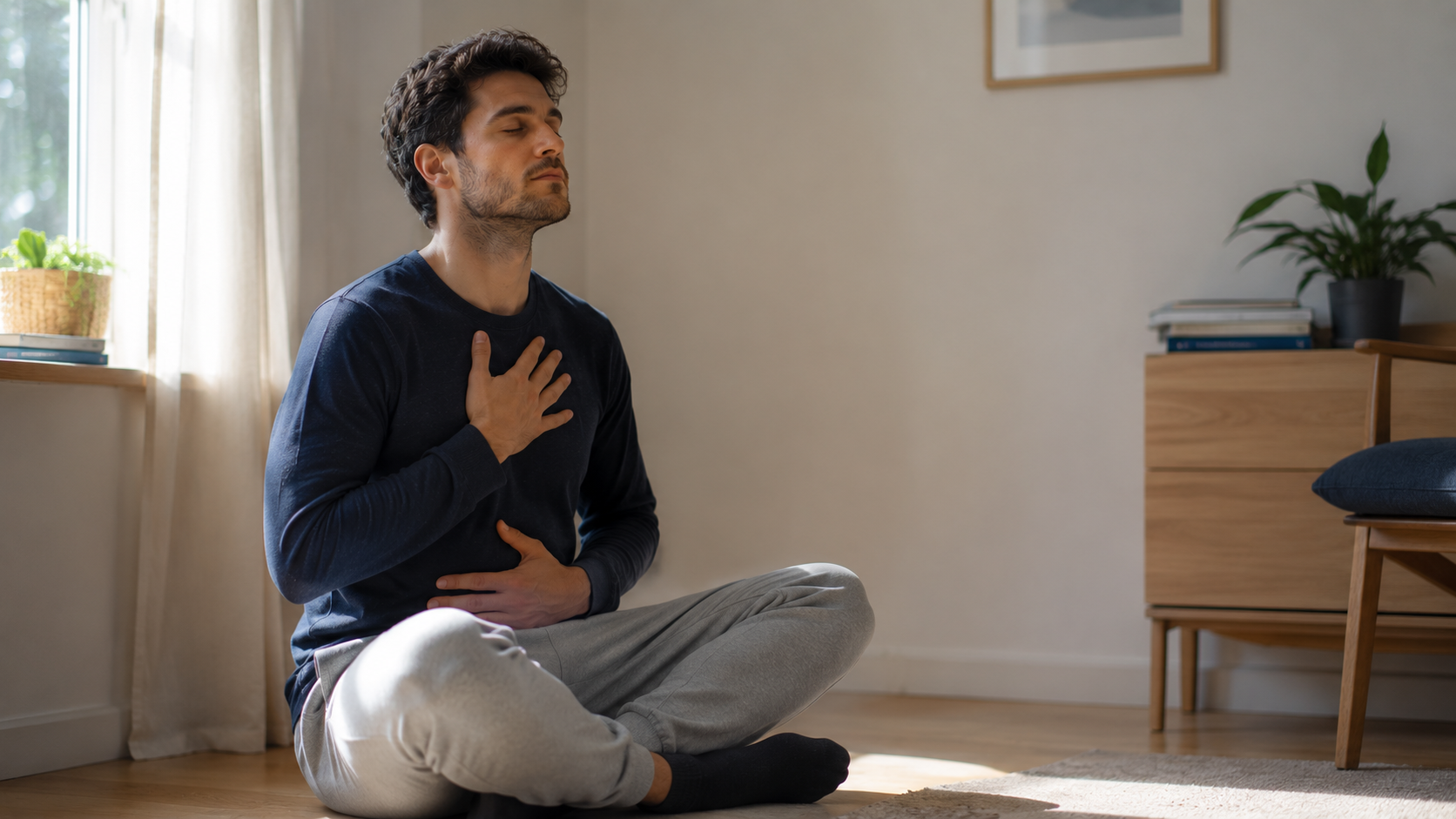
Effective trauma treatment isn’t just about understanding what happened, although this is a key aspect of recovery.
Remember, insight matters. Being able to tell your story matters.
However, recovery can also involve learning to recognise what happens in the body, understanding patterns of threat and safety, developing greater emotional regulation, and gradually experiencing relationships and environments differently.
The important question is not just:
“What happened to you?”
It is also:
“What did you have to learn to do to survive it – and do you still need to do it now?”
When trauma is reframed in this way, it becomes more possible for us to change the way we understand (and treat) trauma.
Why?
Because it enables us to move away from seeing our (once helpful) responses as weaknesses or character flaws and towards understanding them as adaptations that developed for a reason.
And crucially, once those adaptations are understood, there may be an opportunity to develop something different.
Not by erasing our past, but by helping us feel safer in the present.
What does complex PTSD look like?
Complex PTSD can involve some of the symptoms associated with PTSD, including re-experiencing traumatic experiences, avoidance and a persistent sense of threat.
However, what distinguishes complex PTSD is the additional impact on self-organisation, particularly emotional regulation, self-perception and relationships.
This can look very different from one person to another.
But typically, people with complex PTSD often experience:
- Difficulty regulating anger, fear or sadness
- Feeling emotionally overwhelmed or shutting down during stressful periods
- Persistent shame or they have a deeply negative view of themselves
- Difficulty trusting other people
- Fear of abandonment or rejection
- Difficulty maintaining close relationships
- Feeling detached or disconnected from themselves
- Heightened anxiety and difficulty relaxing
- Recurring patterns of avoidance
- Difficulties with sleep and concentration
Over time, these experiences can affect your relationships, work, family life and even your physical wellbeing.
Understanding the function behind the behaviour
Many individuals who have experienced trauma early on often feel misunderstood and maybe even judged by those around them.
Although it can be difficult for those who care about you to understand why you might react to certain situations the way you do, trauma survivors need to cultivate compassion for the version of themselves that survived their experiences.
Understanding the functioning beneath the behaviour is also crucial.
For example, the person who appears controlling may actually be trying to create predictability and structure.
Someone who withdraws during conflict may be overwhelmed rather than indifferent.
Someone who constantly anticipates problems may have spent much of their early life learning that problems (or danger) could occur without warning.
Understanding the function behind a behaviour can therefore be more useful than simply judging the behaviour itself.
Why high functioning does not always mean healthy
One of the more complicated aspects of complex trauma is that people can become extremely capable at managing life while struggling internally.
You may have built a successful career, maintained steady relationships, raised a family and appear calm and competent to everyone around you.
You might find that friends, family, and colleagues even reward your coping mechanisms.
However, when you scratch beneath the surface, you may find that what seems good and functional is often survival responses activated by earlier experiences. This can look like:
Perfectionism masked as ambition.
Hypervigilance mistaken for attention to detail.
Emotional suppression that looks like composure.
Self-reliance that mimics strength.
But maintaining these patterns often comes at a high psychological cost.
More often than not, most people only seek professional help when the strategies that have sustained them for years begin to stop working.
This may happen following a relationship breakdown, bereavement, professional pressures, burnout or another significant life transition.
Speak with a professional today.
Childhood trauma does not determine someone’s future
It is important not to assume that childhood trauma inevitably leads to complex PTSD.
As mentioned a few times already, each of us responds to adversity differently, and many factors influence psychological outcomes, including our relationships, social support, individual circumstances and later experiences.
Research does, however, consistently identify interpersonal trauma in childhood as an important factor associated with complex PTSD in adulthood.
The purpose of understanding this relationship is not to explain someone’s entire adult life through the lens of their childhood.
Rather, it is to create a more informed understanding of what they may be experiencing now.
An individual’s trauma history is only part of their story.
It is not their identity.
Treatment needs to address more than the memory

Effective treatment for complex PTSD isn’t just about encouraging individuals to revisit what happened to them.
For many people, treatment often begins with establishing safety, developing emotional regulation and building a trusting therapeutic relationship before deeper trauma-focused work can take place.
Clinical literature supports a multi-modal approach that can include psychoeducation, self-regulation strategies and trauma-focused interventions.
From a clinical perspective, this is one of the reasons why individualised assessment matters.
Two people may have experienced apparently similar childhood circumstances (like in the earlier example of the two siblings).
Still, once they reach adulthood, they may experience very different symptoms, coping strategies, relationships, and strengths.
Treatment should reflect that difference.
Depending on the individual, therapy may involve trauma-focused psychological treatment alongside work on emotional regulation, relationships, self-understanding, anxiety, depression, substance use or other difficulties that have developed alongside the trauma.
The objective is not only to address symptoms.
It is to support you through the process of developing a greater sense of safety, choice and flexibility in your adult life, which can take time and patience.
Recovery can mean living differently, not forgetting
For someone living with complex PTSD, recovery does not necessarily mean forgetting what happened or reaching a point where their past has no emotional significance.
For many, a more realistic approach is to begin the process of no longer organising the present around the expectations of the past.
It can also mean recognising when your nervous system is responding to an old threat rather than a current one, and gradually developing relationships in which trust becomes possible.
It can also mean experiencing emotions without being overwhelmed by them.
And perhaps most importantly, recovering from complex trauma can look like developing a sense of self that is not defined by what happened during childhood.
A different relationship with the past
Childhood trauma can shape adult life in profound and unique ways, but it does not have to influence the path you take in life.
The choice is yours and yours only.
With the right assessment, therapeutic relationship and appropriately paced treatment, people can begin to understand the patterns that once protected them and develop new ways of responding.
At our treatment centre in Spain, we believe effective trauma care begins with understanding the individual rather than focusing solely on diagnosis or traumatic history.
Of course, the past deserves to be understood.
But the important distinction is that it does not have to control your future.
Trauma treatment in Spain
If you or someone close to you is experiencing difficulties associated with trauma, PTSD or complex PTSD, seeking professional support and care can be an important first step towards understanding what is happening and what support may be appropriate.
Contact our team at Camino Recovery in Spain for further information and support, or to learn more about our personalised trauma treatment programmes.


